9 Best Backyard Greenhouse Kits (November 2026)
The best backyard greenhouse kits include the Backyard Discovery Poppy 9' x 6' Cedar for year-round growing, the Backyard Discovery Bellerose 9' x 6' White for a larger growing space, and the HOOYEAH 6 x 6 FT Polycarbonate Greenhouse for small yards.
On this page (4 sections)
The best backyard greenhouse kit for most gardeners is the Backyard Discovery Poppy 9' x 6' Cedar, because its cedar frame, thick polycarbonate panels and temperature-triggered fan handle four seasons without extra gear. The Bellerose is the pick for more floor space, the HOOYEAH 6 x 6 wins in a small yard, and the Yesker tent kit suits renters and balcony growers.
A greenhouse kit is only as good as its frame, its cover and how much room it leaves you to work. That third part gets overlooked.
A kit that fits the footprint but leaves no space for shelves or a wheelbarrow turns into a storage shed for empty pots.
This guide sorts nine kits by what they do well, from small pop-up covers to cedar walk-ins with wiring and fans. Our backyard greenhouse guide explains the types and cover materials in more depth if you are still deciding whether a kit or a custom build fits your yard.
Our picks at a glance
-
1
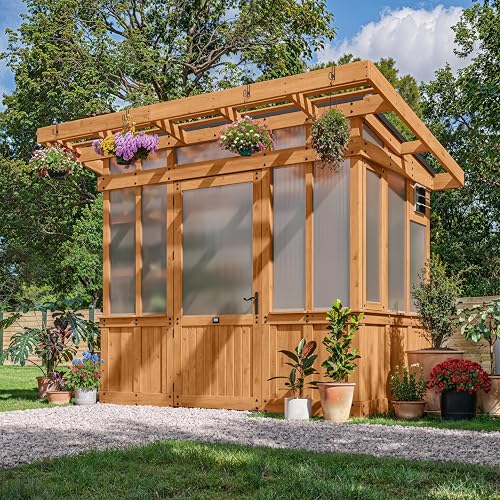 Best for year-round growing
Backyard Discovery Poppy 9' x 6' Cedar
9.7/10 our score
See it on Amazon -
2
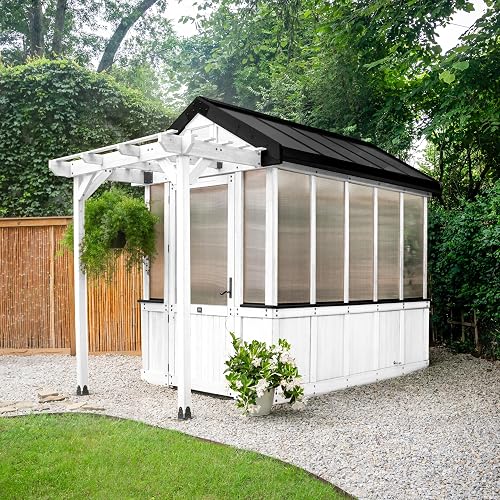 Best for a larger growing space
Backyard Discovery Bellerose 9' x 6' White
9.5/10 our score
See it on Amazon -
3

- 4
 Check it
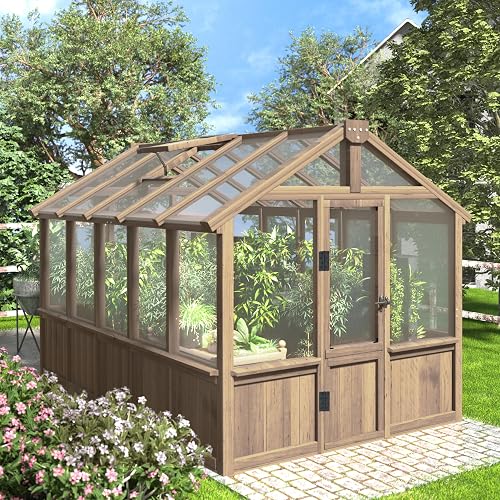
MUPATER 6'x10' Wooden Greenhouse for Outdoor
Best wooden kit for long narrow yards - 5
 Check it
Aoxun 6x8 FT Wooden Greenhouse for Outdoors
Best for hanging baskets - 6
 Check it
HOOYEAH Greenhouse Kits for Outdoors
Best for a first walk-in kit - 7
 Check it
Yesker Mini Greenhouse 71"x36"x36" Portable Small Green
Best for patios and balconies - 8
 Check it
PABIMIA 10x18 FT Aluminum Greenhouse
Best for serious growing space - 9
 Check it
Reljofum 6'X11' Aluminum-Framed Polycarbonate Greenhouse
Best for quick assembly
The best backyard greenhouse kits by growing need
Every kit here starts as a frame and a cover. The differences come from how much room it gives you, how it handles heat and airflow, and how much setup work it takes before your first plant goes in.
Backyard Discovery Poppy 9' x 6' Cedar: Best for year-round growing
- 100% cedar wood frame
- Commercial-grade 4-wall polycarbonate panels
- Temperature-activated exhaust fan
- 26 linear feet of staging shelves
- PowerPort with 3 outlets and 3 USB ports
Cedar construction, thick polycarbonate and a fan that runs on temperature make this the closest kit to a permanent garden room.
Pros
- Fan turns on with rising heat
- Built-in shelves and workstation
- Power outlets for lights and fans
- Interior and exterior hose hookups
Cons
- Over 700 pounds
- Costs more than aluminum kits
This is the kit to buy if you want one greenhouse that works all year without adding shelves, a fan or a power strip later. The Poppy starts as 100% cedar wood and covers it with commercial-grade 4-wall polycarbonate panels on the roof and windows.
Backyard Discovery says those panels hold heat about 30% better than standard double-wall polycarbonate. The panels matter most in winter, when every degree you keep overnight is a seedling that survives.
Inside, 50 square feet of floor space comes with a built-in workstation. You get 26 linear feet of fixed lower and upper staging shelves, a 4-tiered staging rack and 4 plant hooks.
The PowerPort adds 3 electrical outlets and 3 USB ports for fans, lights or a heat mat. The power source itself is not included.
The temperature-activated exhaust fan and one easy-open window handle airflow without you thinking about it. Exterior and interior hose hookups, plus an included interior hose, make watering simple.
Cedar costs more and the kit is heavy at 329 kg. Backyard Discovery rates it to 2,600 pounds of roof load and 100 mph winds when anchored as specified, and covers it with a 5-year warranty.
It suits a gardener who plans to keep the greenhouse in place for years and wants shelves and power from day one. The trade-off against the Bellerose is interior space: 50 square feet here versus 54.
Backyard Discovery Bellerose 9' x 6' White: Best for a larger growing space
- 100% cedar wood frame
- 54 sq ft interior
- Temperature-activated exhaust fan
- Attached pergola
- PowerPort with 3 outlets and 3 USB ports
The same cedar and polycarbonate build as the Poppy with more floor space and a pergola over the door.
Pros
- Slightly more interior room than the Poppy
- White cedar finish
- Built-in staging shelves
- Powered outlet panel
Cons
- Longer footprint needs more yard
- Heavier than most aluminum kits
The Bellerose takes the Poppy's cedar and polycarbonate recipe and stretches the floor space to 54 square feet. It still runs 9 x 6 ft, but the footprint is longer at 159 in against the Poppy's 131.49 in.
Measure that extra length before you commit, because it changes how the kit sits along a fence or wall. It is also heavier, at 798.1 pounds.
Its roof carries a higher snow rating: Backyard Discovery lists up to 3,700 pounds or 30 inches of snow load and 100 mph winds when anchored as specified. That makes it the sturdier of the two cedar kits for snow country.
A 5-year warranty covers both.
Staging space is laid out differently. You get 13 linear feet of lower shelves and 6 feet of upper shelves, plus 4 plant hooks.
The Bellerose offers 19 linear feet of staging split across lower and upper levels, which suits different pots and trays. The temperature-activated exhaust fan, one window, PowerPort and hose hookups all carry over.
The white cedar finish and attached pergola give it a lighter look, and the pergola is a natural spot for climbing vines or string lights.
Choose it over the Poppy if you want more room to move and a higher snow rating, and you have the extra yard length to spare.
HOOYEAH 6 x 6 FT Polycarbonate Greenhouse: Best for small yards
- Aluminum frame
- UV-protected polycarbonate panels
- Adjustable roof vent
- Lockable door
- 6 x 6 ft footprint
A compact walk-in that fits a corner or narrow strip, with a lockable door and one roof vent for airflow.
Pros
- Compact square footprint
- Lockable door
- Aluminum frame resists rust
- Roof vent adjusts by hand
Cons
- Only one vent
- Milky panels cut some light
This HOOYEAH kit is the best fit for a yard that cannot give up much ground. At 6 x 6 ft, it tucks into a corner, beside a shed or along a narrow strip where a 9 x 6 cedar kit would crowd the space.
The frame is upgraded aluminum with a reinforced structure, so it will not rot and needs less upkeep than wood.
The panels are semi-translucent milky white polycarbonate that blocks harmful UV rays and spreads light evenly. They are not clear, so expect a soft-light look inside rather than full sun.
That suits vegetables, herbs and flowers. A single adjustable roof vent and a lockable door manage airflow and access, and the upgraded lock installs smoothly and adds stability.
HOOYEAH notes the kit works best with partial wind protection, such as near a fence or wall. The assembly is simplified, and the instructions call for installing the reinforcement bar for best performance.
The trade-off against the cedar kits is clear: less floor space, one vent and no built-in shelves or power. In return, you get a compact kit that is easier to fit and easier to keep clean.
It is a sensible first walk-in for a small garden.
MUPATER 6'x10' Wooden Greenhouse for Outdoor: Best wooden kit for long narrow yards
- Cedar wood frame
- 6mm polycarbonate panels
- Adjustable roof windows
- Lockable door
- 6 x 10 ft footprint
A long cedar kit that lines up along a fence or wall, with panels that block almost all UV light.
Pros
- Cedar frame resists decay
- Two adjustable roof windows
- Lockable door
- Long footprint uses edge space
Cons
- Narrow width limits shelving depth
- No powered fan
MUPATER's cedar kit uses its 6 x 10 ft footprint well. It is long and narrow, which makes it a natural fit along a boundary wall or at the end of a vegetable bed.
A 6 ft width leaves room for a central path with shelves down one side. At 282.4 pounds it sits between the heavier Backyard Discovery kits and the light aluminum ones.
The frame is cedar wood with hardware to match. The panels are multi-layer polycarbonate, and MUPATER says they block up to 99.99% of UV light while still letting sunlight through and holding heat.
Adjustable roof windows let you open the vents to different widths for airflow. A lockable front door protects tools and plants, and the walk-in working area gives you space to water and organize pots.
MUPATER includes instructions and tools for a quick build.
Against the Backyard Discovery cedar kits, it gives up interior square footage and the powered fan. Against the aluminum kits, it gives you a wood frame that stands up to wind and rain.
Pick it when your yard is long and thin and you want cedar without the size of a 9 x 6 kit.
Aoxun 6x8 FT Wooden Greenhouse for Outdoors: Best for hanging baskets
- Cedar wood frame
- 6mm polycarbonate panels
- Adjustable roof vent up to 45 degrees
- Lockable door
- Heavy-duty hooks rated to 55 lb
A mid-size cedar kit with roof hooks for lights or hanging plants and a roof that opens wide for airflow.
Pros
- Hooks hold up to 55 lb each
- Roof vent opens to 45 degrees
- Cedar frame
- Anchoring stakes and bolts included
Cons
- Smaller than the 9 x 6 cedar kits
- No powered fan or outlets
Aoxun's 6 x 8 ft cedar kit earns its place with a small feature that changes how you use the space: heavy-duty roof hooks rated to 55 lb each. Hang a grow light, a basket of trailing plants or a string of decorative lights without drilling into the frame.
The roof opens to a 45-degree angle on a single connecting rod, so you set the vent position by hand to control airflow and temperature. An extra vent keeps air moving even when the windows are closed.
Multi-layer polycarbonate panels filter UV rays and spread light evenly from seedling to mature plant.
Aoxun includes anchoring stakes and expansion bolts. With those in place, the company rates the kit to about 6 inches of snow depth and 60 to 70 mph winds.
That is lower than the Backyard Discovery ratings, so clear snow promptly in a heavy winter. At 6 x 8 ft it also gives up floor area to both 9 x 6 cedar kits.
Choose it over the 9 x 6 cedar kits if you want a smaller footprint with hanging space. Choose the cedar Backyard Discovery kits instead if snow load or interior shelving matters more.
HOOYEAH Greenhouse Kits for Outdoors: Best for a first walk-in kit
- Aluminum frame
- UV-protected polycarbonate panels
- Adjustable roof vent
- Lockable door
- 6 x 10 ft footprint
The longer version of the HOOYEAH kit gives you more growing room without the weight of a wooden frame.
Pros
- More length than the 6 x 6 HOOYEAH
- Aluminum frame
- Lockable door
- Roof vent for airflow
Cons
- Single roof vent
- Needs a spot sheltered from strong wind
If the 6 x 6 HOOYEAH kit feels too tight, this is the same kit stretched to 6 x 10 ft. The extra length gives you room for a potting bench at one end and growing beds at the other.
That kind of layout is hard to fit in a square footprint. The kit measures 70.87 in long by 119.06 in wide, so plan the site with the longer side in mind.
The aluminum frame and UV-protected polycarbonate panels carry over, as do the adjustable roof vent and the lockable door. HOOYEAH builds these kits around quick assembly, and the upgraded lock adds stability.
The panels are milky white and semi-translucent, so light comes in diffused rather than direct. Like the smaller version, HOOYEAH recommends a spot with partial wind protection.
Place it near a fence, wall or shrubs rather than in the open.
The single vent is the main limitation in hot weather, so on still summer days you will want the door open too. This is the best pick for a first walk-in kit when you want growing length without the weight and cost of cedar.
It also suits a renter who may need to move the greenhouse later.
Yesker Mini Greenhouse 71"x36"x36" Portable Small Green: Best for patios and balconies
- Powder-coated iron frame
- Transparent PVC cover
- Two zippered top doors
- Tool-free assembly
- 71 x 36 x 36 in
A lightweight tent greenhouse you can move between patio, balcony and sunroom as the seasons change.
Pros
- Assembles without tools
- Moves indoors or out
- Clear cover lets light in
- Zippered doors for venting
Cons
- PVC cover is not rigid
- Not a true walk-in
Not every backyard needs a permanent structure. The Yesker mini greenhouse is a 71 x 36 x 36 in tent with a powder-coated iron frame and a clear PVC cover.
It assembles without tools and all the parts come apart, so you can move it from the patio to the balcony or into a sunroom when the weather turns. At 5 pounds, one person can carry the frame and cover.
Two semi-circular zippered doors sit on top. Open them to water, fertilize and let air through, or close them to hold warmth around delicate plants in cold spells.
The clear cover lets maximum sunlight in. The frame is rust-resistant and the cover's extended bottom lets you add weights in windy conditions.
It holds herbs, flowers and small vegetables in pots rather than ground beds.
Compared with the walk-in kits, this is a short-term plant shelter, not a growing room. It is the right answer for a balcony, a rental or a patio corner, and the wrong one if you want to stand inside and work.
For more options in this class, see our roundup of portable greenhouses.
PABIMIA 10x18 FT Aluminum Greenhouse: Best for serious growing space
- Powder-coated aluminum frame
- 4mm double-wall polycarbonate panels
- Adjustable roof vents
- Drainage gutter
- 10 x 18 ft footprint
A very large kit for gardeners who want room for beds, shelves and a wheelbarrow all at once.
Pros
- Very large footprint
- Twin roof vents
- Gutter directs rain away
- Powder-coated frame
Cons
- Needs a large, level yard
- Big assembly job
The PABIMIA kit is for the gardener who has the yard and wants the space. At 10 x 18 ft, it offers a footprint several times larger than the 6 x 6 kits.
You can lay out beds, shelves and a central walkway without squeezing. The frame is powder-coated aluminum with a reinforced panel structure.
The cover is 4mm double-wall polycarbonate that diffuses direct light. Two adjustable roof vents help move air on sunny days.
The peak height is 98 in and the standing room is 6 ft 8 in, so most people can walk in and work upright. An integrated drainage gutter guides rain away from the base.
PABIMIA recommends anchoring it and clearing heavy snow when needed. The kit ships with labeled parts and a manual to ease assembly.
The slide-in panel design adds support to the structure as you build.
The trade-offs are size and effort. It needs a large, level spot and a serious build day.
Against the cedar kits it gives up the wood look and the powered fan, but it wins on floor area by a wide margin. Pick it if you plan to grow at volume.
Reljofum 6'X11' Aluminum-Framed Polycarbonate Greenhouse: Best for quick assembly
- Aluminum frame
- UV-blocking polycarbonate panels
- Adjustable roof vent
- Lockable door
- 6 x 11 ft footprint
A long aluminum kit built around slide-in panels and quick-connect parts, so the frame goes up faster.
Pros
- Slide-in panels simplify setup
- Adjustable roof vent
- Lockable door
- Long growing strip
Cons
- Shipped in two boxes that may arrive apart
- Lowest wind rating in this group
Reljofum builds this 6 x 11 ft kit around speed of setup. The frame is aluminum with quick-connect parts, and the polycarbonate panels slide into place.
Reljofum says the design boosts setup speed by 40% and stability by 35%, figures from its own development work. At 52.7 pounds, the whole kit is light enough for two people to move before assembly.
The panels are UV-blocking polycarbonate that filters harmful rays while letting sunlight through. An adjustable roof vent can be mounted on any panel during assembly, so you can put it where airflow matters most.
A lockable door keeps the kit secure in wind. The footprint gives a long growing strip, similar in spirit to the MUPATER and HOOYEAH long kits.
The door is 22.83 in wide by 60.63 in high.
Its wind rating is the lowest here at 50 mph, and the snow load capacity is listed as 40 kg per square meter. Plan a sheltered spot and clear snow.
It ships in two boxes that may arrive at different times, so check both before you start building. Choose it when fast assembly matters more than the highest weather rating.
How these backyard greenhouse kits were compared
Our score weighs specs, features and buyer feedback against what you're shopping for in a backyard greenhouse kit. We started with the frame material, because cedar and aluminum fail in different ways.
Cedar resists decay and carries higher wind and snow ratings in this group. Aluminum never rots and costs less, but the lighter kits need shelter.
Next we looked at the cover. Every kit here uses polycarbonate except the Yesker tent, which uses PVC.
Thicker multi-wall panels hold heat better, and Backyard Discovery's 4-wall panels claim 30% better heat retention than double-wall. Milky or semi-translucent panels diffuse light; clear panels let more through.
The Aoxun and MUPATER kits use 6mm multi-layer panels with UV filtering, while the aluminum kits vary in panel thickness.
Then we measured the working space. Floor square footage, shelf linear feet, vent count, door type and outlet panels all affect how the greenhouse feels on a wet February morning.
A kit with shelves and power built in saves you a weekend of DIY later. We also noted whether the kit is a true walk-in or a reach-in tent.
Finally we checked weather ratings and assembly notes. A snow load figure only counts when the kit is anchored as the maker specifies.
We treated ratings as the maker's claims and weighed them against the frame and cover. Kit weight and box count also matter when you plan the build.
What separates a walk-in kit from a tent greenhouse?
A walk-in kit has a rigid frame and panels you stand inside, with a hinged or sliding door. The Backyard Discovery, HOOYEAH, MUPATER, Aoxun, PABIMIA and Reljofum kits all qualify.
A tent greenhouse like the Yesker has a lightweight frame and a flexible cover, so you reach in through zippered openings rather than walk around. Walk-ins suit year-round growing and heavy snow; tents suit seasonal protection and easy moving.
How do you read a snow load and wind rating?
Check what the maker lists and whether it assumes anchoring. Backyard Discovery ties its 2,600 and 3,700 pound roof ratings to anchoring as specified in the manual.
Aoxun pairs its 6 inch snow depth and 60 to 70 mph wind figures with included stakes and bolts. Reljofum lists 40 kg per square meter of snow load and a 50 mph wind rating.
Treat all of them as claims that depend on a level, secured base.
What should you check before buying a backyard greenhouse kit?
Decide the footprint first and the features second. Measure the spot, including door swing and clearance on all sides.
Then match the kit to your climate and how much you plan to grow. Our guide to whether a greenhouse is worth it helps you weigh the cost against the harvest you expect.
Wood or aluminum frame?
Pick cedar if you want a structure that handles snow and wind. Backyard Discovery rates its cedar kits to 100 mph winds and about 30 inches of snow load when anchored as specified.
Pick aluminum if you want lower weight, no rot and easier cleaning. Aluminum kits like the HOOYEAH models need partial wind protection.
Cedar costs more and takes longer to assemble.
How much floor space do you need?
A 6 x 6 kit suits one gardener, a few shelves and pots on the floor. A 6 x 10 or 6 x 11 kit adds room for a bench and a path.
A 9 x 6 cedar kit gives you built-in shelving and a workstation. A 10 x 18 kit is for serious growing at volume.
Go one size up from your first instinct if you plan to overwinter plants.
Which cover material keeps heat best?
Multi-wall polycarbonate holds heat better than single-layer covers. Backyard Discovery's 4-wall panels claim 30% better heat retention than standard double-wall.
Clear PVC on the Yesker tent lets in more light but insulates less. For winter growing, choose the thickest polycarbonate you can afford and plan to add a heat source.
Milky panels cut light slightly but spread what gets through.
Do you need vents and a fan?
Yes, if you grow through summer. One roof vent is the minimum; two vents or a powered fan is better.
The Backyard Discovery kits include a temperature-activated exhaust fan that runs when the air gets hot. Kits without a fan rely on you opening the door and vents each morning.
Plan your daily routine around that. A second vent, as on the Aoxun and MUPATER kits, gives you more control on still days.
Where should the kit go in the yard?
Pick a level spot that gets sun most of the day and shelter from the worst wind. The HOOYEAH kits specifically ask for partial wind protection near a fence or wall.
The PABIMIA kit needs a large flat area for its 10 x 18 ft footprint. Keep the door side clear and leave room to reach all the panels for cleaning.
An uneven base twists the frame and keeps doors from closing.
Do you need power run to the site?
The Backyard Discovery kits include a PowerPort with 3 outlets and 3 USB ports, but the power source is not included. If your kit has no outlets, plan an outdoor-rated extension cord to a covered, dry connection point.
Power matters most if you run a fan, grow lights or seedling heat mats through winter. Factor the electrical run into your budget before the kit arrives.
Which backyard greenhouse kit is right for you?
The decision comes down to space, climate and how much you want to build. Buy the Backyard Discovery Poppy if you want the best backyard greenhouse kit for year-round growing with shelves, power and a fan already included.
Choose the Bellerose if you want more floor space and a higher snow rating.
For a small yard or a first kit, the HOOYEAH 6 x 6 or 6 x 10 gives you a walk-in at lower weight and cost. Pick the MUPATER or Aoxun cedar kit when you want wood and a long or hanging-friendly layout.
The PABIMIA kit suits volume growing, and the Yesker tent covers patios and balconies.
Once the kit is up, decide what goes inside. Our guide on what to grow in a greenhouse maps crops to seasons so your first planting goes to the right bed.
Our top 3 picks at a glance
-
1
Best for year-round growing
Backyard Discovery Poppy 9' x 6' Cedar
9.7/10 our score
See it on Amazon -
2
Best for a larger growing space
Backyard Discovery Bellerose 9' x 6' White
9.5/10 our score
See it on Amazon -
3
Frequently asked questions
What size backyard greenhouse kit should I buy?
Start with the footprint you can fit with at least a few feet of clear space around it. A 6 x 6 kit suits one gardener and a few shelves, while 9 x 6 and larger kits give room for staging tables, pots and a walkway.
Measure the spot first, including door swing.
Are wooden or aluminum greenhouse kits better?
Cedar kits like the Backyard Discovery models handle wind and snow loads well and look like a garden building. Aluminum kits such as HOOYEAH and PABIMIA cost less and never rot, but they are lighter and need shelter from strong wind.
Pick cedar for permanence, aluminum for budget and easy care.
Do greenhouse kits need a foundation?
Most walk-in kits sit best on a level, solid base such as a concrete pad or gravel and timber frame. The cedar Backyard Discovery kits anchor as the manual specifies and carry snow and wind ratings.
An uneven base twists the frame and keeps doors from closing, so level the site before assembly.
Can I leave a greenhouse kit up all winter?
Yes, if it is anchored and rated for snow. The Poppy and Bellerose cedar kits are rated to about 30 inches of snow load when anchored as specified.
Clear heavy snow from the roof and keep a vent cracked on mild days to stop condensation and mold.
How long does it take to assemble a backyard greenhouse kit?
Small aluminum and tent kits go up in a few hours with two people. Cedar kits with shelves and wiring take most of a weekend.
Backyard Discovery provides pre-cut, pre-drilled pieces and step-by-step help in its BILT app, which shortens the job.
Do I need power in a backyard greenhouse?
Not always, but it helps. A kit with a powered outlet panel, like the PowerPort on the Backyard Discovery models, runs fans, grow lights and seedling heat mats from one spot.
If your kit has no outlets, run an outdoor-rated extension cord to a covered, dry connection point.


