Best Home Greenhouse Kits: How to Choose
Pick a polycarbonate kit with an aluminum frame when you want the best home greenhouse kit for year-round growing: it diffuses light, holds heat and stands up to weather better than a pop-up cover. Choose a pop-up PE kit when you need quick seasonal protection and easy storage.
On this page (10 sections)
- What do the best home greenhouse kits have in common?
- Which cover should you pick: polycarbonate or PE?
- How much floor space does a walk-in kit need?
- Which kit suits a vegetable garden?
- Which kit suits a small yard or patio?
- Is a pop-up kit worth it for quick setup?
- How should you plan the site and setup?
- How do you pick between these three kits?
- What should you check before you buy?
- Which kit is the best home greenhouse kit for most gardens?
The best home greenhouse kit for most gardens is a polycarbonate walk-in with an aluminum frame. Its rigid panels hold heat and diffuse light, and the aluminum frame resists weather across seasons.
A pop-up kit earns its place when you need quick, movable protection.
The answer depends less on brand than on three choices: what the frame and cover are made of, how big the footprint is, and whether you'll leave it up all year. Get those right and a kit earns its keep; get them wrong and it becomes an expensive storage problem.
This guide works through those choices in order. It also names three kits that fit different needs, so you can see how the specs translate into a real buying decision.
If you want the wider picture first, our is a greenhouse worth it guide covers cost against harvest.
What do the best home greenhouse kits have in common?
The best home greenhouse kits share four things: a frame that resists weather, a cover that suits the season, a size you can walk into, and ventilation you can control. Miss any one and the kit fights you all year.
Start with the frame. Aluminum won't rust and keeps its shape, so it's the usual choice for a permanent kit.
Steel is strong but needs a rust-resistant finish to survive damp air. A pop-up frame uses lighter tubing and relies on its hub and supports to stay rigid.
Then look at the cover. Polycarbonate panels are rigid and semi-translucent, so they scatter light and trap warmth.
PE covers are flexible and light, which makes them easy to roll up, store and move, but they offer less insulation and less rigidity.
Size is next. A kit you can walk into lets you water and prune without crouching.
Walk-in floor space matters more than headline dimensions, because shelves and pots eat into it fast.
Finally, ventilation. A roof vent, mesh windows or a roll-up door lets you dump heat on a warm day.
Without that, even a good kit traps too much heat by mid-morning.
Our score weighs specs, features and buyer feedback against what you're shopping for. Pick a kit that meets all four basics before you compare prices or extras.
Which cover should you pick: polycarbonate or PE?
Choose polycarbonate if you garden across seasons; choose PE if you garden in bursts. Polycarbonate holds heat and light better, while PE wins on weight, portability and cost.
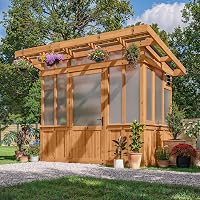
Polycarbonate panels are rigid sheets. The HOOYEAH kit uses semi-translucent, milky white panels that diffuse sunlight and block some UV.
That soft light suits vegetables, herbs and flowers, though you won't see through the panels like glass.
PE covers are woven or film plastic. The Crown Shades kit uses an upgraded PE cover with UV and anti-aging treatment to shield plants from harsh sun, light rain and dust.
It's light, folds away and costs less, but it insulates less than a rigid panel.
Polycarbonate: best for winter and steady temperatures
Polycarbonate suits a gardener who wants to start seedlings early and keep greens going into winter. The rigid panels and aluminum frame create a more solid structure that holds warmth through cold nights.
The trade-off is weight and permanence. A polycarbonate kit is heavier to move and needs a level base, so treat it as a fixed feature rather than something you relocate each season.
It also needs a vent, because trapped heat builds fast.
PE: best for seasonal protection and easy storage
PE suits renters, small plots and anyone who only needs protection for a few months. A pop-up frame with a PE cover goes up in minutes and comes down for winter storage.
The trade-off is durability and insulation. A PE cover won't hold heat like rigid panels, and it needs proper anchoring in wind.
It's best for frost protection, hardening off seedlings and extending a shoulder season, not deep-winter growing.
Decide the cover by your calendar, not by the price. If you'll garden through winter, polycarbonate is the practical base.
How much floor space does a walk-in kit need?
Measure the site, the door and the walking room before you buy. A 6 x 6 ft kit needs a level pad with clearance on all sides, while an 8 x 6 ft kit needs more open floor but the same access space.
Walk-in floor space splits into two jobs: growing area and moving area. Shelves and pots fill the growing zone; you still need room to stand, water and reach the back.
A 6 x 6 ft footprint gives about 36 sq ft. That's enough for shelving down both sides plus a few large pots, and it leaves a center path.
An 8 x 6 ft pop-up gives about 48 sq ft, so more floor stays open for big containers.
Plan for headroom too. Walk-in kits are tall enough to stand in, but the door and roof shape affect how you move trays in and out.
Check the peak height against your tallest plants.
Leave clearance outside the walls for ventilation gaps, door swing and access. A kit pushed tight into a corner loses airflow and becomes hard to clean.
Tape the footprint on the ground first. If the outline crowds a path or blocks a gate, size down or move the spot.
Which kit suits a vegetable garden?
A vegetable garden needs light, airflow and room for tall plants. The HOOYEAH polycarbonate kit is the strongest fit for vegetables grown across seasons, while shelving kits suit seed starting.
Vegetables like tomatoes and peppers want bright, diffused light and steady warmth. The HOOYEAH panels diffuse sunlight evenly, and its roof vent helps dump heat before it builds.
The lockable door keeps the space secure and makes watering simple.
Root crops and leafy greens tolerate cooler, softer light. A kit with shelves, like the Sannwsg model, holds trays and small pots at different heights, so you can rotate crops as they grow.
For a full walkthrough of what grows well and how to lay it out, see our guide to a greenhouse for vegetables. It pairs well with this one: that post covers planting, this one covers the structure.
Match the kit to your crop plan. If you'll grow tall vines, favor open floor and headroom; if you'll raise seedlings, favor shelves.
Which kit suits a small yard or patio?
Small yards reward compact kits with a small footprint. The Sannwsg walk-in, at 57 x 29 x 76 in, fits a narrow patio edge and organizes plants on shelves without eating much ground.
Its footprint is long and narrow rather than square. That shape suits a strip beside a fence, a wall or a garage, where a square kit would block a path.
Tiered shelves put seed trays and pots at useful heights.
The steel frame uses galvanized technology for rust and fade resistance, and the kit comes with indoor thermometers for tracking conditions. Its PE cover gives indirect light and holds moisture and heat, which helps with winter protection and cuttings.
Setup needs no tools, and the components detach, so you can move the kit when the season changes. That flexibility matters when a patio doubles as seating space in summer.
The trade-off is floor room. A narrow kit gives more shelving than open ground, so it's better for pots and trays than for large in-ground beds.
If you're still deciding whether a kit belongs on a patio at all, read our comparison of outdoor greenhouse options first. It covers placement and shelter in more depth.
Pick the narrow kit for a strip site. Pick a wider kit only when you have open ground to spare.
Is a pop-up kit worth it for quick setup?
A pop-up kit is worth it when speed and portability beat insulation. The Crown Shades 8x6 sets up in minutes without tools, so it suits renters and gardeners who only need seasonal cover.
The CenterLok system is a one-push hub, and an internal support pole under the center adds rigidity to the frame. Three height settings change clearance as plants grow.
A roll-up door and mesh windows help release heat on warm days.
The cover is PE rather than polycarbonate. That makes it light and easy to store, but it insulates less and needs proper anchoring in wind.
Crown Shades asks you to use suitable anchors when conditions are windy.
The kit carries a 2-year limited warranty, with a full canopy replacement in year one and parts in year two. The terms exclude normal wear and damage from wind, weather or improper assembly.
For a gardener who wants protection from spring frost and an early start, a pop-up is a sensible first kit. It also works as a hardening-off space before plants go into open ground.
Choose it for a short season and easy storage. Skip it if you need to garden through hard frost, where a rigid panel kit does more.
How should you plan the site and setup?
A kit performs only as well as its site. Pick a level, sunny spot with shelter from strong wind, then anchor the frame and check the door and vent before planting.
Sunlight comes first. Most greenhouse crops want several hours of direct light, so a spot shaded by a building or tree limits growth.
Watch the site through a day before committing.
Wind is the second factor. Crown Shades asks for proper anchors, and a kit in a fully exposed spot takes far more stress.
A fence, wall or shrub breaks the worst of it.
Level ground keeps the frame square and the door working. A slight slope can rack the frame over time.
Use a solid base or level the ground before assembly.
Leave clearance for airflow and access. Doors need room to swing, vents need space to open, and you need room to carry trays and water in.
Setup steps that apply to most kits
Clear and level the pad, then lay out the frame parts before you start. Assemble the base and frame first, then fit the cover or panels.
Anchor the frame at the corners and along the base. Check the door alignment and vent travel before you load shelves or plants.
Then water the ground inside to settle dust and raise humidity.
Plan the site before you buy the kit. A good kit in a poor spot underperforms a basic kit in a good one.
How do you pick between these three kits?
The right kit follows your season, your space and your crop plan. Pick the HOOYEAH polycarbonate kit for year-round growing, the Sannwsg shelving kit for a narrow patio, and the Crown Shades pop-up for fast seasonal cover.
Use this order to decide:
- Set your growing season. Winter growing pushes you to polycarbonate; a short shoulder season allows a pop-up.
- Measure the site. A strip favors the narrow Sannwsg kit; open ground favors the 8 x 6 Crown Shades kit.
- Match the cover to your crops. Tall vegetables want headroom and venting; seedlings want shelves.
- Check the anchoring plan. Every kit needs fixing down and some wind shelter.
The polycarbonate kit scores highest here because it covers the most seasons and the most crop types. The shelving kit wins on small-space organization.
The pop-up wins on speed and storage.
If you're weighing a kit against a custom build, our backyard greenhouse kits comparison looks at the kit side in more detail. It covers frame and cover choices for a home backyard.
Set your season first, then your site, then your kit. That order stops you buying more structure than your garden needs.
What should you check before you buy?
Check the frame, cover, size, vent and anchor plan, then confirm how the kit arrives. The best home greenhouse kit for you is the one whose frame, cover and footprint match your site and season, not the one with the most extras.
Frame material decides how long the kit lasts outdoors. Aluminum resists rust and holds shape; steel needs a rust-resistant finish; pop-up tubing needs its supports intact.
Ask how the frame is anchored before you commit.
Cover type decides the season. Polycarbonate holds heat and diffuses light; PE stays light and portable.
Match the cover to the months you'll actually garden.
Size and layout decide usability. Walk-in height, door width, shelving and floor room all affect how often you'll use the kit.
A kit that's awkward to enter gets ignored.
Ventilation decides plant health. A roof vent, mesh windows or a roll-up door gives you control over heat and humidity.
Check the vent type and how it opens.
Delivery and assembly matter too. Kits ship flat and vary in part count.
Confirm the box size fits your route and that the assembly steps match your comfort level.
Buy for the site and the season, and the extras become a bonus rather than the deciding factor.
Which kit is the best home greenhouse kit for most gardens?
The HOOYEAH 6 x 6 FT Polycarbonate Greenhouse is the best home greenhouse kit overall for most gardeners. Its aluminum frame, UV-protected panels, roof vent and lockable door make it the most capable kit here for growing across seasons.
Choose the Sannwsg walk-in when space is a narrow strip and you mainly raise trays and pots on shelves. Its steel frame and tiered layout organize a small site well.
Choose the Crown Shades 8x6 pop-up when you want quick, tool-free setup and easy storage for a short season.
Use the decision rule one more time: year-round growing points to polycarbonate, a narrow patio points to shelving, and a fast seasonal setup points to a pop-up. Pick the kit that matches your calendar and your ground, and it will earn its space.
If you're still weighing whether to buy a kit at all, read our is a greenhouse worth it guide. It sets the cost against the harvest, so you can decide with clear numbers.
Frequently asked questions
What is the best home greenhouse kit for a beginner?
A pop-up PE kit like the Crown Shades 8x6 is the easiest start because it sets up without tools and moves when the season changes. Choose a polycarbonate kit instead if you plan to garden through winter.
Is polycarbonate better than PE for a greenhouse cover?
Polycarbonate panels are rigid, diffuse light and hold warmth, so they suit year-round growing. PE covers are lightweight, flexible and cheaper, which makes them better for seasonal protection and easy storage.
How big a greenhouse kit do I need?
Measure your site and your plant list first. A 6 x 6 ft walk-in holds shelves and a few large pots, while an 8 x 6 ft pop-up gives more open floor space for watering and moving around.
Do greenhouse kits need to be anchored?
Yes. Any kit should be fixed down, and Crown Shades asks you to use proper anchors in windy conditions.
Place the kit where a fence, wall or shrub blocks the worst wind.
Where should I put a home greenhouse kit?
Choose a level spot with several hours of sun and shelter from strong wind. Avoid fully exposed positions, keep the door clear and leave room to reach every shelf.
Can I move a greenhouse kit later?
Pop-up kits and detachable-frame models can be taken down and moved, which helps when you rent or change your garden layout. A rigid polycarbonate kit is heavier and best treated as a permanent placement.