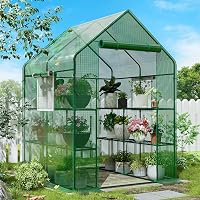
Greenhouse Kits for Small Backyards: How to Choose
The best greenhouse kits for small backyards are pop-up or walk-in kits that fit your real floor space with room to open doors and clear the fence. Measure the spot first, then match frame strength and cover to your weather, and choose the smallest size that still gives you working room.
On this page (8 sections)
- How much floor space does a small backyard greenhouse kit really need?
- What frame and cover should you look for in a kit?
- Which greenhouse kit fits your small backyard?
- How do you site a small greenhouse kit for light and shelter?
- How do you anchor and set up a kit safely?
- How do you keep the right temperature inside a small kit?
- How does a kit compare with a high tunnel or a built greenhouse?
- Which greenhouse kit should you buy for your small backyard?
Greenhouse kits for small backyards come down to one decision: fit the kit to the space you actually have, then match its frame and cover to your weather. A 6 x 4 ft pop-up or a 6 x 8 ft walk-in kit covers most small yards without swallowing the lawn.
Measure the spot before you shop. The kit's outside dimensions matter more than the growing area, because you also need room to open the door and reach every shelf.
If you're still deciding whether a greenhouse earns its place at all, read is a greenhouse worth it before spending. This guide covers how to size, site and choose a kit that suits a smaller garden.
How much floor space does a small backyard greenhouse kit really need?
A small backyard greenhouse kit needs its own footprint plus a clear working margin, not just the growing area. A 6 x 4 ft kit measures about 70.9 in long by 47.2 in wide, so plan for roughly 6 x 4 ft of level ground and a little more for access.
The quoted size describes the outside of the frame. The usable floor inside is smaller once you allow for the frame thickness and the plants sitting against the walls.
Then add the space you need to use the door. A roll-up door swings or rolls upward, so leave a clear path in front of it and enough room to carry a watering can or a tray of seedlings past it.
Fences and walls matter too. A kit set hard against a solid fence loses light on that side and traps still air, so leave a gap for airflow and check how the sun moves across the spot during the day.
If you garden on a patio rather than a lawn, confirm the kit's footprint fits between the house and the boundary. A kit that fits the gap but leaves no room to stand at the door is not a good fit.
The smallest kit here shows why the margin matters. The EAGLE PEAK 6x4 measures 70.9 in long by 47.2 in wide and stands 88.6 in high, and its 6 x 4 ft floor leaves a strip to stand in only if you grow on shelves rather than in beds.
On a lawn, set the kit on level ground so the frame stays square and the door rolls cleanly. On a patio, check that the legs sit on paving rather than bridging a gap between slabs.
Rule: choose the largest kit your spot allows with the door clear and every side reachable, not the largest kit that technically fits.
What frame and cover should you look for in a kit?
The frame and cover decide how long a small greenhouse kit lasts. Powder-coated steel frames and UV-resistant PE covers are the practical baseline for backyard kits, because both handle sun and damp better than bare metal or thin film.
The three EAGLE PEAK kits in this guide use an alloy steel frame with a powder-coated rust-resistant finish. That coating matters in a small yard, where the kit often sits close to a fence or wall that holds moisture after rain.
The covers are polyethylene (PE), described as plant-safe, water-resistant and UV-resistant. A UV-resistant cover keeps its strength through a sunny summer instead of going brittle and tearing in the first wind.
The maker describes the PE cover as filtering sunlight while locking in humidity, which is what gives plants frost protection in fall and early winter.
Look at how the cover attaches to the frame. A cover held by ties and a ground skirt is easier to tension and replace than one sewn tight to the frame, and replacement covers are sold for these kits.
Ventilation belongs in the same decision. Two mesh windows and a zippered roll-up door let you dump heat on a warm afternoon, which matters more in a small kit because the air volume heats fast.
The smaller 6 x 4 kit lists two mesh vents, and the larger kits pair their roll-up door with mesh windows on the sides.
Weight and pack size matter when you are moving a kit through a side gate alone. The 6 x 4 kit weighs 22.3 pounds and the 8 x 6 kit weighs 15.9 kg, so both can be handled by one person in sections before the frame is locked up.
Rule: buy a kit with a coated steel frame and a UV-resistant cover, and check that replacement covers are available before you order.
Which greenhouse kit fits your small backyard?
Each of these kits fits a different small-yard situation. The backyard greenhouse guide explains how sizes and covers work in general; here are the three kits we would start with.
EAGLE PEAK 8x6 Walk In Pop Up: the best fit for most small yards
This is the kit we would pick for most small backyards. Its 8 x 6 ft floor gives 48 sq ft and 6 ft walls, so you can stand upright and work at a bench instead of crouching.
The PeakPush center lock lets one person raise the pre-assembled frame without tools. The cover is PE with scrim-reinforced corners, and a wide zippered roll-up door plus mesh windows control airflow.
The kit lists two mesh windows and a roll-up door, so you can open both sides to move air through the length of the house.
Steel frame, coated finish, wind ropes and stakes come with it. Buyers in open yards should still plan to add weight bags or heavier stakes, since a kit this size catches a lot of wind.
Shelves and a potting bench fit inside without crowding the floor. The maker points to its shelving as an add-on and to a potting bench as another, so the 8 x 6 floor can be split into a work end and a growing end.
That combination turns a small footprint into a real workspace rather than a row of pots.
Rule: choose this kit if you want to stand and work in your greenhouse, and your spot has room for about 8 x 6 ft plus a clear door.
Eagle Peak 6x8 Pop-Up Greenhouse with Side Door: fast cover for a bed or shelves
This kit suits someone who wants quick seasonal cover more than a permanent workspace. The frame arrives pre-assembled and goes up with a single push, and the legs adjust to three heights so taller plants have headroom.
The side door changes how you use the space. It lets you reach the far end without walking the full length, which helps when the kit sits against a fence or in a corner.
The kit lists two large mesh windows and a zippered front door, so ventilation runs on more than one wall.
The PE cover is 150g/sgm and the frame is powder-coated metal. That heavier cover weight is worth noting in a small yard, where a lighter film can flap and wear at the frame corners.
Its footprint is the same 6 x 8 ft band, but the lighter pop-up build suits a renter or a gardener who packs the kit away between seasons. The kit lists two doors rather than one, which helps when the long side sits against a fence.
Stake it well in exposed spots.
Rule: pick this kit if you want to raise cover fast over a raised bed and may take it down at the end of the season.
Eagle Peak 6x4 Pop-Up Greenhouse: the corner-sized option
This is the smallest kit here and the one for a narrow patio, a side return or a corner beside a shed. At 6 x 4 ft it fits where a walk-in kit would block the path.
The kit lists a 6 x 4 size in clear and white, with a single roll-up door and two mesh vents.
Setup is one person and tool-free, and the kit includes a zippered roll-up door and two mesh vents. The steel frame is powder-coated and the cover is PE, like the larger kits.
The maker lists its shelving as a fit for this size, so a shelf kit doubles the growing space without adding floor area.
The trade-off is floor space. A 6 x 4 ft kit works best as a shelf greenhouse, with pots stacked along the walls and a strip left to stand and water.
It also suits a first greenhouse. You can learn how much heat and humidity build up in a small covered space before committing to a bigger kit.
The maker notes the cover filters sunlight and holds humidity, so the first season teaches you how much venting a small volume needs.
Rule: choose this kit if your only free spot is a corner or narrow gap, and you plan to grow on shelves rather than in beds.
How do you site a small greenhouse kit for light and shelter?
Site the kit for morning sun and shelter from the worst wind, with the long side facing south if you can. A small kit heats and cools faster than a large greenhouse, so light and airflow matter more, not less.
Watch the spot through a full day before you commit. Note where shadows fall from the house, fence and trees, and where the ground stays wet after rain.
Avoid the coldest hollow at the bottom of a slope, where frost settles. A spot with good drainage and several hours of direct sun suits most kits.
The maker lists frost protection and seed starting among the jobs these covers do, so a sunny, well-drained spot lets the cover earn its keep from the first cold night.
Wind is the bigger risk in a small yard. A gap between buildings can funnel gusts, and a pop-up kit presents a large sail area.
Set the kit where a fence or hedge breaks the wind without shading the cover. The maker recommends weight bags or heavy-duty stakes in strong winds and suggests weighting the ground skirt with bricks or rocks.
Keep the kit clear of overhanging branches. Falling leaves block light and gather on the roof, and a branch can tear a PE cover in a storm.
Rule: pick the sunniest sheltered spot with good drainage, and keep the door side clear so you can get in and out easily.
How do you anchor and set up a kit safely?
Anchor a small greenhouse kit before the first windy day, not after it. Every kit here comes with stakes and guy ropes, and those are the starting point rather than the whole answer.
Set the frame on level ground first. An uneven base twists the frame, which stops the door closing and strains the joints.
The pop-up kits in this guide raise with a center lock or a single push, so the frame goes up square only if the legs start level.
Drive the stakes at each leg and set the guy ropes wide enough to pull against the wind. Weight the ground skirt with bricks, rocks or sandbags so air cannot get under the cover.
The maker lists the ground skirt as the place to add weight when the forecast turns.
Then check the vents and door. Opening them in light wind lets air pass through, which reduces the load on the cover and frame.
Clear snow from the roof in winter. The kits are described as suitable for fall and early winter, but a pop-up structure needs snow cleared and reinforcement before storms.
The maker recommends monitoring in heavy snow and reinforcing the frame during storms.
Check the anchors each season. Stakes work loose in wet ground, and a rope that has frayed or slipped is no longer holding anything.
Rule: anchor every leg, weight the skirt and clear the roof after snow, and recheck the anchors at the start of each season.
How do you keep the right temperature inside a small kit?
Small greenhouse kits heat up and cool down quickly, so vent early and add shade before plants suffer. The smaller the covered volume, the faster the change.
A 6 x 4 kit has far less air to warm than an 8 x 6 walk-in, so the same sunny morning pushes it hotter.
Open the door and mesh windows on sunny mornings to dump heat. Close them in late afternoon to hold warmth overnight, which is the point of the cover in fall and early spring.
The maker lists shade covers and heaters as separate accessories that help regulate temperature in varying conditions.
Shade covers help in midsummer, when a small kit can get too hot even with the door open. A shade cover over the roof cuts the sun at its strongest point instead of relying on venting alone.
Use a thermometer inside the kit rather than guessing. Reading the actual temperature tells you when to vent, when to close up and whether a heater is needed on cold nights.
Watering needs attention too. A covered kit holds humidity and dries more slowly than open ground, so check the soil before topping up.
That trapped humidity is a benefit for seedlings and cuttings, but it also means pots can stay wet longer than they would outdoors.
Rule: vent in the morning, close up in the afternoon, and add shade or heat only when your thermometer says you need it.
How does a kit compare with a high tunnel or a built greenhouse?
A kit suits a small backyard better than a high tunnel in most cases. High tunnels are built for market growers with long rows and machinery access, while kits are sized for a home garden.
A high tunnel covers a large area with a hooped frame and roll-up sides. It needs more space, more anchoring and usually more than one person to cover.
Our greenhouse vs high tunnel comparison walks through when each one earns its place.
A kit like the 8 x 6 walk-in gives you standing room and a door on a footprint that fits a normal garden. A fixed greenhouse with glass or polycarbonate panels is sturdier still, but costs more and usually needs a foundation.
The maker also offers a lean-to model and other sizes for anyone comparing shapes.
For a renter or a first-time grower, a pop-up kit is the low-commitment route. You can try a season of growing under cover, learn what your spot does, and upgrade later.
The size you pick should match the growing you plan. A 6 x 4 ft shelf kit covers seed starting and a few herbs; an 8 x 6 ft walk-in gives room for a bench and larger plants.
Rule: choose a kit for a home garden, a high tunnel only if you grow at scale, and a fixed greenhouse only when you can build a base and want a permanent structure.
Which greenhouse kit should you buy for your small backyard?
Buy the EAGLE PEAK 8x6 Walk In Pop Up if your spot allows it. The 9.7 score reflects the steel frame, the 6 ft walls and the one-person setup, which together give the most usable growing space of the three.
Pick the 6x8 side-door kit if you want quick seasonal cover over a bed and may pack it away. Its adjustable legs and side door suit a raised bed against a fence, and the heavier 150g/sgm cover helps it stand up to a full season outdoors.
Choose the 6x4 kit when the only free space is a corner or a narrow patio and shelves will do the growing.
Measure the spot and the door swing before ordering, then anchor the kit properly on the day it goes up. That order of steps keeps greenhouse kits for small backyards useful instead of turning them into a wind-damaged frame in the first storm.
For a wider look at types and covers, browse our roundup of backyard greenhouse kits before you decide.
Frequently asked questions
What is the smallest greenhouse kit that still works for growing?
A 6 x 4 ft kit is the practical floor for most small yards, because it holds shelves along the walls and leaves a strip to stand and water. Anything smaller tends to become storage rather than growing space.
Do small greenhouse kits need a foundation?
Pop-up kits usually sit straight on level ground and anchor with stakes and guy ropes. Fixed frame kits often need a level base such as slabs or a timber frame so the doors close cleanly and the frame stays square.
Can a pop-up greenhouse stay up through winter?
A pop-up kit can handle fall and early winter frosts, but it needs monitoring in heavy snow or strong wind. Clear snow from the roof and reinforce the frame before storms if you plan to leave it up.
How much sun does a small backyard greenhouse need?
Most kits want several hours of direct sun a day, so site yours away from a north-facing wall and out of deep shade. A spot that gets morning sun and some afternoon shade suits many plants in warm climates.
How do I stop a small greenhouse blowing over?
Stake every leg, set the guy ropes wide and weight the ground skirt with bricks or bags. Open vents and doors in light wind let air pass through instead of catching the cover like a sail.