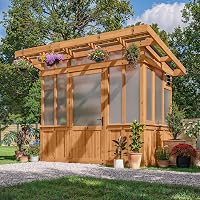
Best Greenhouse Kits Made in the USA: How to Choose
Greenhouse kits made in usa come down to checking where the frame and panels were made, not just where the brand is based. Ask for the country of origin on the frame and panel before you buy, then match size, snow load and venting to your yard.
On this page (10 sections)
- What does "made in usa" actually mean for a greenhouse kit?
- Which frame material holds up best in your yard?
- How do the panel types change light and heat?
- What size greenhouse kit fits your space and crops?
- Where should you put a greenhouse kit?
- How do vents, doors and airflow keep plants healthy?
- How should you prepare the site and anchor the kit?
- How do you compare a domestic kit with an imported one?
- What should you check before ordering a kit?
- What does a greenhouse kit add to your backyard?
Greenhouse kits made in usa are worth hunting down if you want to know where your frame and panels come from. The real test is the country of origin on the parts, not the brand's mailing address.
A US-sounding name on the box tells you little. Ask a seller which components are domestic before you order, and treat the answer as the deciding detail in the listing.
This guide covers how to check origin, how frames and panels differ, which size fits your yard, and how to place and vent a kit so the structure earns its space.
What does "made in usa" actually mean for a greenhouse kit?
A greenhouse kit counts as made in usa when its frame, panels and hardware are manufactured or assembled domestically, not when a US company simply sells it. The label lives on the components.
Federal rules let a brand claim "Made in USA" only when all or nearly all of the product is made here. "Assembled in USA" is a looser claim that covers a kit built from imported parts.
Ask three questions before you buy:
- Where is the aluminum or wood frame extruded or cut?
- Where are the polycarbonate panels formed?
- Who packs and ships the kit?
How to read origin claims without being fooled
A flag icon and a city address on a product page prove nothing about manufacturing. Look for the country of origin field on the carton or ask the seller to name the factory.
If the answer is "designed in the US, made overseas," that is a valid choice for many buyers. You just want to know it up front.
The product data behind the kits here lists brands and model numbers but not manufacturing countries, which is normal for many listings. That gap is exactly why a pre-sale question matters more than a page badge.
Treat origin as one filter, not the whole decision. A kit that fits your yard, climate and budget beats a domestic kit that is wrong for the site.
Which frame material holds up best in your yard?
Aluminum wins for most buyers because it resists rot, rust and insects with almost no upkeep, and most polycarbonate kits here use it. Wood suits buyers who want a warmer look and will keep up with sealing.
Aluminum frames are light, so two people can move panels into place during assembly. They also handle wet climates well, which matters if your yard sits in a humid region.
Wood frames look like a small building rather than a tent, which can matter if your town or HOA reviews the plan. Fir needs stain or paint every few years and a firm base to stay square.
Think about how much maintenance you will actually do. A frame you never touch is better than a prettier one you let weather.
Aluminum kits: low upkeep for wet climates
Aluminum kits suit rainy yards and busy gardeners. The HOOYEAH 6 x 6 FT uses an upgraded aluminum frame with a reinforced structure for outdoor use.
The frame is built to stay stable through different seasons, which fits a backyard that sees wind and rain. Place it near a fence or wall rather than in a fully exposed spot.
Pick aluminum if you want to set it and forget it. You trade a little warmth of look for years of low upkeep.
Wood kits: a building-style look with upkeep
Wood suits buyers who want the greenhouse to read as a structure. The Yardenaler 8x12 FT uses a fir wood frame with 6 mm polycarbonate panels in light mocha brown.
Its sturdy base support and reinforced construction help it stand through snow and rain when it is anchored well. Plan to seal the wood and keep water away from the base.
Choose wood if appearance matters and you will maintain it. Budget time for staining and for checking the base each season.
How do the panel types change light and heat?
Polycarbonate panels are the standard cover on most kits, and the thickness and tint decide how much light and heat your plants get. Twin-wall panels hold warmth better than a single sheet.
Milky white panels diffuse light rather than passing a sharp beam. That soft light suits vegetables, herbs and flowers that would scorch under direct glass.
Thicker multiwall panels add insulation, which helps in cold nights and cuts glare. They also weigh more, so the frame needs to carry that load.
Single-wall panels are lighter and cheaper but lose heat faster. Use them in mild climates and accept a shorter shoulder season.
Milky diffused panels for gentler light
Diffused panels block harmful UV rays and spread light evenly. The HOOYEAH Greenhouse Kits for Outdoors uses semi-translucent milky panels for this soft-light effect.
This cover works well for seedlings that stretch toward a window light, since the spread light is more even. It also softens summer glare inside the house.
The listing is clear that these panels are not fully transparent or clear. Plan on a soft-light house rather than a glasshouse with a sharp view out.
Pick diffused panels for seedlings and leafy crops. The light is gentler and easier to manage than clear glass.
Thick multiwall panels for cold nights
Thicker panels mean more trapped air and slower heat loss. The Yardenaler kit uses multi layers of polycarbonate for high light transmission and UV protection.
That extra layer helps on frosty nights, though no unheated panel kit keeps tropical plants alive in a hard freeze. Combine it with a heater for winter crops.
Choose 6 mm multiwall if your seasons are short or cold. It buys you a longer growing window than a thin single sheet.
What size greenhouse kit fits your space and crops?
Start with the footprint you can spare and the tallest plant you will grow, then round up. A kit that crowds the door or the beds becomes a chore you avoid.
Sizes run from compact 6 x 6 squares to 8 x 12 runs that feel like a small building. The smaller footprint suits a first greenhouse or a patio corner.
Length matters more than width for staging along benches. A 6 x 10 gives you a longer work run than a 6 x 6 while keeping the same depth.
Height decides whether you can stand up and whether tall tomatoes fit. A walk-in height around 76 in lets most people move without stooping.
Small 6 x 6 kits for tight yards
A 6 x 6 fits a patio corner, a side yard or a spot beside a shed. The HOOYEAH 6 x 6 FT measures 70.87 in long, 71.95 in wide and 76.9 in high.
That height is walk-in for most adults, and the space holds shelves, pots and a few beds. It is a sensible first kit.
Choose 6 x 6 if space is tight and you mainly start seeds and grow herbs. It will not feed a large family on its own.
Longer 6 x 10 and 8 x 12 kits for real harvests
A longer run gives you staging space, a center path and room for taller crops. The HOOYEAH Greenhouse Kits for Outdoors is 6 x 10 at 70.87 in by 119.06 in, 76.9 in high.
The 8 x 12 Yardenaler measures 101.97 in wide, 144.7 in deep and 90.55 in high, with a door 28.66 in wide and 71.4 in high. Its vent is 21.7 in square.
Pick 8 x 12 if you plan to grow through winter or sell at a market. The extra depth holds benches on both sides and a wide path between.
Where should you put a greenhouse kit?
Put the kit where it gets morning sun, shelter from the worst wind and easy access to water and power. Leafy crops tolerate some shade; fruiting crops want more hours of sun.
The HOOYEAH kits note that partial wind protection helps, such as near a fence, wall or shrubs. Avoid a fully exposed spot with strong winds.
A south or southeast face of the house often gives the best light and blocks cold wind. Keep the door side clear so you can wheel in a cart or haul bags of soil.
Stay close to a water source, since hauling cans kills the joy of a small kit. Run a hose bib or set a rain barrel near the door.
Our guide on where to put a greenhouse in your yard covers sun paths and drainage in more depth.
Mark the footprint with stakes for a week before you build. You will spot shade, puddles and foot traffic you missed on paper.
How do vents, doors and airflow keep plants healthy?
One roof vent helps, but you need a path for air to move in low and out high. A single vent in a sealed box will warm fast on a sunny day.
The HOOYEAH kits include one adjustable roof vent and a lockable single hinged door. The Yardenaler uses an adjustable roof that opens up to 45 degrees.
Open the door on mild mornings and crack the roof vent to flush humid air. Damping off in seedlings and mildew on leaves both thrive in still, wet air.
A thermometer on the wall tells you more than a guess from outside. Add a fan to push air across the house on hot afternoons.
Our guide on heat and airflow covers fan and vent setups for small kits.
Plan for at least a door and one roof vent, then add a fan. A kit with good airflow cuts disease before it starts.
How should you prepare the site and anchor the kit?
Spend a weekend on the base before the box arrives, because a level, drained site matters more than the frame. A kit on soft or sloped ground twists and leaks.
Clear the spot and mark the corners square with string lines. A laser or a 3-4-5 string triangle checks the right angles.
For a ground-set kit, dig out the topsoil, lay landscape fabric and spread gravel. Gravel drains and grips the frame.
For a firm base, pour a pad or set pressure-treated beams in a bed of gravel. Wood kits like the Yardenaler call for a sturdy base support.
Check that the site sheds water away from the door. A low spot that ponds in spring will rot wood and loosen bolts.
Why the reinforcement bar matters at install time
Both HOOYEAH manuals ask you to fit the reinforcement bar as shown, and skipping it costs you frame stiffness. That bar is what keeps the frame square when wind pushes on a panel.
If your site sees gusts, the order of work matters. Fit the bar before the panels go on so you can still reach the frame joints.
Our backyard greenhouse guide walks through bases and covers by build type.
Never skip a load of gravel. It costs a little and saves the frame and door from shifting every winter.
How do you compare a domestic kit with an imported one?
Compare a domestic kit and an imported one on frame, panel thickness, venting, anchors and parts support, and only then on origin. The better build is worth more than the label alone.
A domestic kit often gives faster replacement parts and clearer assembly support. An imported kit can cost less and offer the same basic design.
Ask both sellers the same things: panel thickness, frame gauge, snow and wind ratings, and how long a replacement part takes to ship.
A kit that fits your climate will feel better in year three than a cheaper one that leaks. Read the dimensions and the reinforcement steps in the manual and decide if you can follow them.
Our walk through home greenhouse kits compares sizes and covers in more detail.
Test the seller's response time with a pre-sale email. How they answer a sizing question tells you how they answer a parts problem.
What should you check before ordering a kit?
Run a short checklist before you pay, because most kit regrets are site or size mistakes, not frame failures. Catch them while the order can still change.
- Measure the footprint, door clearance and the tallest plant.
- Confirm the site is level and drains away from the door.
- Ask the seller for the country of origin of frame and panels.
- Check local permit and HOA rules for accessory structures.
- Plan the base material and the anchor method.
- Confirm vent and door setup for your climate.
- Plan water and power access near the door.
Also check the door width against your wheelbarrow and your widest pot. A 28.66 in door on the Yardenaler is fine for a cart but tight for a wide bench.
The Yardenaler listing also asks you to confirm that installation is allowed in your area before you buy. That line matters more than the footprint itself, since a town can refuse a structure that fits your lot.
Our piece on is a greenhouse worth it helps you weigh the cost against the harvest you expect.
Do the checklist once and keep the notes. Future expansions get easier when you know the constraints.
What does a greenhouse kit add to your backyard?
A kit gives you a place to start seeds early, grow greens through cold months and protect tender plants from wind. The value comes from using it, not from the box.
A 6 x 6 suits a first season of seedlings and herbs. A 6 x 10 or 8 x 12 lets you stage crops and grow through winter with a little heat.
Origin matters, but the site, the base and the airflow matter more. Get those right and the frame serves for years.
Greenhouse kits made in usa are worth the search if domestic parts and local support matter to you. Ask for the origin details, check the base plan, and pick the size your yard and crops can use.
Frequently asked questions
How can I tell if a greenhouse kit is made in the USA?
Look for a country of origin label on the box or the frame and panel components. A US brand name does not mean US manufacturing, so ask the seller directly which parts are domestic and which are imported.
Is an aluminum or wood frame better for a backyard greenhouse?
Aluminum needs less upkeep and resists rot, which suits rainy or humid areas. Wood adds a warm look and takes paint or stain, but it needs sealing and a sturdy base to hold its shape over time.
Do I need a permit for a greenhouse kit?
Small kits often fall under shed rules, but many towns count a walk-in greenhouse as an accessory structure. Call your local building department with the size and footprint before you order, since rules change by town and lot.
What is the best floor for a greenhouse kit?
A gravel bed over landscape fabric drains well and anchors the frame, while a concrete pad gives the firmest base. Both work for ground-set kits, so pick based on drainage and how permanent you want the build to be.