Which Greenhouse Thermometer Should You Use?
Choose a greenhouse thermometer that shows both temperature and humidity, and decide whether you need current readings, daily highs and lows, or several monitoring points. Place it near your plants, out of direct sun.
On this page (8 sections)
- What should a greenhouse thermometer measure?
- Where should you place a greenhouse thermometer?
- Is a max-min greenhouse thermometer useful?
- When does a digital greenhouse thermometer make sense?
- Should you choose an analog greenhouse thermometer?
- How do you compare thermometer readings?
- Can a thermometer help with greenhouse heat and airflow?
- Which greenhouse thermometer should you use?
Choose a greenhouse thermometer that measures temperature and humidity, then pick the display style that fits how you garden. A max-min model shows daily swings, a digital unit gives quick readings, and a multi-pack can help compare separate growing areas.
Place the thermometer near your plants, at roughly leaf height, and out of direct sun. Check its reading at consistent times so you can spot patterns before adjusting vents or heat.
What should a greenhouse thermometer measure?
A useful greenhouse thermometer measures current temperature, and a hygrometer adds humidity readings. If overnight cold or daytime heat is your concern, high and low records can show whether conditions changed while you were away.
Temperature at one point doesn't describe every shelf or bed. A thermometer near a sunny wall may read differently from one among shaded plants, so location matters as much as the display.
For a starting point on suitable growing temperatures, see what temperature a greenhouse should be. The right target depends on what you are growing and the conditions you can maintain.
Where should you place a greenhouse thermometer?
Place a greenhouse thermometer at plant height and away from direct sun. Avoid positioning it right next to a heater, vent, door, or cold exterior surface unless you're checking that specific spot.
If plants sit on benches at different heights, measure where the leaves are. In a larger structure, compare readings in more than one area rather than assuming the center represents the whole greenhouse.
The TempPro TP49 set has tabletop stands, magnetic backs, and hanging mounts. Use the display positions that suit your shelves or walls, and compare readings at the same time of day.
Is a max-min greenhouse thermometer useful?
A max-min thermometer is useful when you want to see the day's highest and lowest temperatures, not only the current reading. Reset its records as directed so you know which period the numbers cover.
The Brannan model shows current, high, and low temperatures, along with current humidity. It is wall mounted and can be reset, which suits a fixed greenhouse spot.
Read the dial at a consistent time and record the values if you want to compare days. A single reading taken in the afternoon won't show how cold the greenhouse became overnight.
When does a digital greenhouse thermometer make sense?
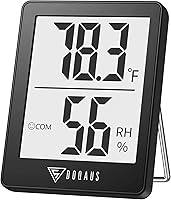
A digital thermometer makes sense when you want an easy-to-read display and high-low records. The TempPro TP50 updates temperature and humidity readings every 10 seconds and displays their high and low records.
It has a tabletop stand and magnetic back, so you can place it on a shelf or a suitable metal surface. It includes an AAA battery and a Fahrenheit/Celsius selector.
The TP50 also has a dry, comfort, or wet humidity indicator. Treat that icon as a quick cue, then use the actual reading and your plants' needs when deciding what to change.
Should you choose an analog greenhouse thermometer?
Choose an analog thermometer if you want a battery-free dial that stays in one spot. The large-dial indoor outdoor model displays temperature and humidity and can hang on a wall or sit on its detachable bracket.
Its maker says to allow 1 to 2 hours after setup for automatic calibration, and notes that analog readings respond more slowly. Give the dial time to settle before comparing it with another thermometer.
How do you compare thermometer readings?
Compare readings by placing thermometers at the same height and away from direct sun. Check them at the same time, and allow time for a new unit to settle before drawing conclusions.
Small differences can come from location, timing, or how quickly a device responds. If one reading seems unusual, move the thermometer to the other spot and compare again after it has had time to adjust.
Use repeat readings to decide whether a change is needed. Opening vents or adding heat based on a single reading from the wrong location can make conditions less even.
Can a thermometer help with greenhouse heat and airflow?
A thermometer can help you notice when heat builds up or temperatures fall, but it doesn't move air or control a heater by itself. Use the readings to check whether your ventilation or heat plan is keeping conditions within the range your plants need.
For warm-weather adjustments, our guide to cooling a greenhouse in summer heat covers airflow options. If you are adding heat, compare greenhouse heaters with a thermostat and plan where the thermometer will read the surrounding air.
Humidity readings can help you notice damp conditions, but a single reading won't explain their cause. For steps to manage moisture, see how to control greenhouse humidity.
Which greenhouse thermometer should you use?
Choose the Brannan if you want a fixed max-min dial, the TP50 for a digital display with high-low records, the TP49 3-pack to compare multiple areas, or the large-dial model for a battery-free visual check. Whichever you choose, place it near the plants and check readings consistently.
A thermometer helps you observe conditions, while your growing plan determines what to do with the readings. Start with the backyard greenhouse guide if you are still deciding how the structure and growing space should work together.
Frequently asked questions
Where should you put a thermometer in a greenhouse?
Place it near the plants you want to monitor, around their height, and out of direct sun. Keep it away from heaters, vents, doors, and cold exterior walls unless you are checking that specific spot.
For a large greenhouse, use readings from more than one area.
Should a greenhouse thermometer measure humidity too?
A thermometer with a hygrometer is useful if you also want to track greenhouse humidity. Temperature and humidity affect different decisions, so use both readings to guide ventilation and watering checks.
A thermometer without humidity readings can still help you track temperature changes.
Are digital or analog greenhouse thermometers better?
Digital thermometers often show current readings and recorded highs and lows, while analog models work without batteries and can be read at a glance. Choose based on the display and features you need.
Give any new thermometer time to settle before relying on its reading.
Do you need more than one greenhouse thermometer?
More than one thermometer can help if your greenhouse has separate growing areas or noticeably different temperatures near the door, roof, and plant beds. Compare readings at the same time of day and height.
A multi-pack can make it easier to monitor several spots.